
For a short day out, start with your phone, a slim wallet or cardholder, keys and the personal items you actually need. Add extras only after checking the bag closes comfortably and the essentials remain easy to reach. This is a packing method for your own bag, not a claim that every crossbody fits the same set of belongings.
A café visit, a few errands and a longer walk create different packing needs. Choosing the day’s essentials first helps you avoid carrying a bag full of “just in case” items while leaving no room for something you will use.
Build a core list, then add one outing-specific group
- Phone: include its case when checking fit.
- Payment essentials: the cards, identification and cash you need for the outing, in a wallet or cardholder you already use.
- Keys: bring the set you need rather than every spare key attached to a bulky ring.
- Personal essentials: items you rely on during the day, in their appropriate containers.
Now choose your extras. For a café stop, that might be a compact notebook and pen. For a longer walk, it might be sunglasses in their case. For an afternoon away from charging points, consider your charger or power bank if you use one. These are options, not a universal list: bulky extras may mean choosing a larger bag.
Use three packing zones instead of a pile
Quick-access zone: keep the things you reach for repeatedly, such as your phone or cardholder, near a usable opening or in an appropriate pocket. Do not assume a bag has a dedicated phone pocket unless the listing says so.
Small-item zone: group loose objects in a pouch you can lift out. Choose the pouch after checking the bag’s depth; a rigid organizer can use more room than the items inside it.
Bulky-item zone: place a glasses case or another larger object where it can sit without pressing the rest of the contents out of shape. If everything only fits when you force the opening, reduce the list or change bags.
A woven crossbody example to compare
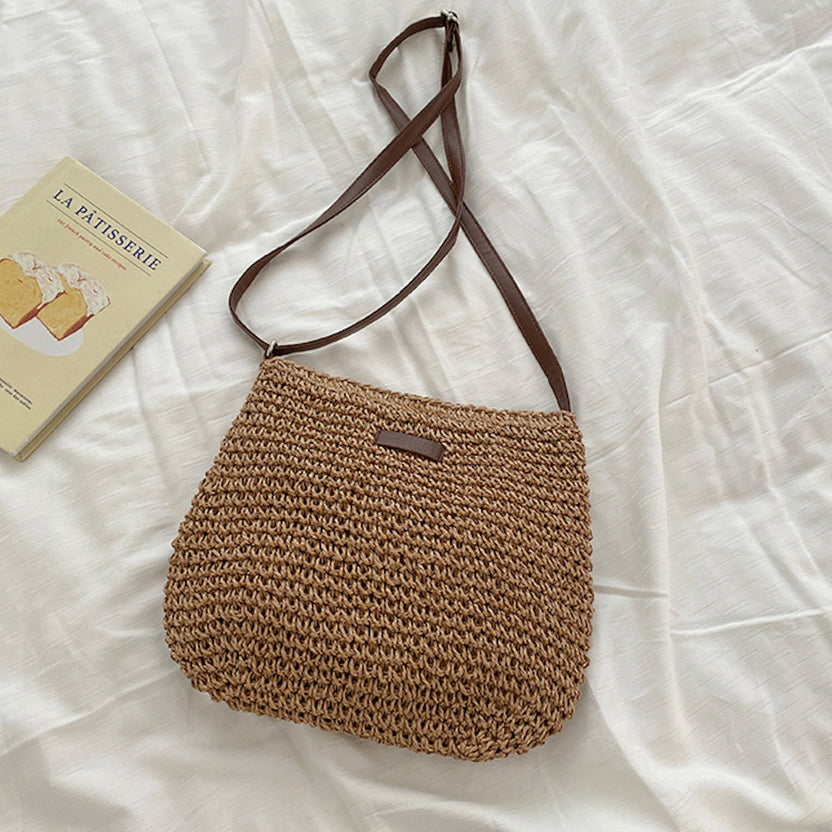
The Woven Straw Crossbody Bag with Small Front Accent currently lists approximate body dimensions of 29 cm wide by 23 cm tall, a synthetic leather strap and a zipper closure, with style reference 8430. Its rectangular shape and softly rounded lower corners provide a useful example for comparing an everyday crossbody silhouette.
Body width and height do not establish usable depth, opening size or strap length. Ask about those measurements if they determine your choice. We have not packed or capacity-tested this pictured bag; compare your belongings with the exact listing rather than treating the checklist as a promised fit.
Do the close-and-reach check
- Put the largest rigid item in first, with its case.
- Add the core essentials and the extras you selected for this outing.
- Close the bag without pushing down on the contents or forcing the closure.
- Take your phone and wallet out, then put them back. If this requires emptying half the bag, simplify the arrangement.
- Try the bag the way you plan to carry it, over your actual outfit, and adjust the strap if the style allows it.
For a new purchase, use a bag you already own to test your packing list. Then compare its dimensions, opening and carrying fit with the candidate. Our handbag measurement guide explains what to record and which missing measurements to request.
Choose a larger carry when the day calls for it
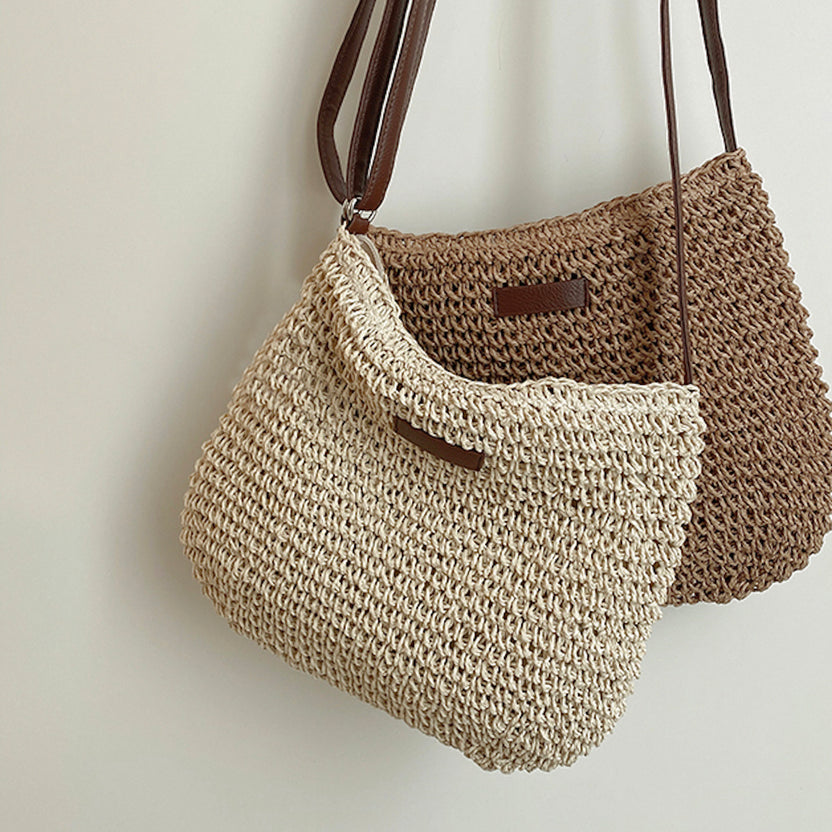
If the day includes a full-size water bottle, a book, an umbrella or a spare layer, start by comparing tote bags as well as crossbodies. A smaller bag is only convenient when it suits your packing list. Choosing more room can be the simpler decision when you know you will need it.
For help choosing how to carry your things, read our tote, crossbody and shoulder bag comparison.
Frequently asked questions
Can I fit a water bottle in a crossbody bag?
It depends on the bottle and the bag. Compare the bottle’s height and diameter with the usable interior and opening, not just the outside width. Do not infer bottle capacity from a model photo or the word “roomy.”
Should I use an organizer pouch?
A small pouch can make loose items easier to move between bags. Check that it leaves enough space for your phone and wallet, and that you can remove it without stretching the opening.
What should I leave out?
Start with duplicates and items you have no plan to use that day. Keep the personal essentials you rely on. If your necessary items do not fit comfortably, choose a larger bag rather than leaving something important behind.
Find your day-out bag
Browse crossbody bags for hands-free carrying styles, or explore straw bags for woven textures. Read the exact product details, current shipping information and return policy before ordering. For an unclear measurement, contact Elena Handbags with the product name or style reference.
0 comments